The Complete Pashmina Shawl Buying Guide
Everything You Need to Know Before You Buy – Plus Our Top Picks
Few fabrics carry the same quiet luxury as pashmina. Hand-spun from the soft undercoat of Himalayan Changthangi goats, a genuine pashmina shawl is lightweight enough to pass through a ring, yet warm enough to replace a winter coat. But with the market flooded by acrylic imitations labelled “pashmina,” knowing what to look for – and where to buy it – makes all the difference. This guide walks through everything from fibre quality to weave types, and rounds up a curated shopping list to help you choose the right shawl.
A Journey Through Time: The History of Pashmina
From ancient trade routes to Mughal courts to Parisian salons, the story of pashmina is as rich as the fabric itself. Here’s how a humble mountain goat’s undercoat became one of the world’s most coveted textiles.
Early Trade Origins
Textual references from Iranian and Syrian trade records suggest fine goat-wool textiles from the Kashmir region were already prized as luxury goods, long before the medieval era. Some scholars also point to mentions of fine woollen garments in ancient Sanskrit epic literature, though these early references are difficult to verify with certainty.
Sultan Zain-ul-Abidin’s Patronage
Widely credited as the founder of Kashmir’s formal weaving industry, the Sultan invited skilled artisans from Central Asia and Persia to train local weavers. Production concentrated around the village of Kanihama, which is why finely woven pashmina is still sometimes called a “Kani” shawl.
The Mughal Boom
Research published by Sulakhan Singh and Showkat Ahmad Dar in a peer-reviewed history journal shows the number of looms producing pashmina in Kashmir grew from roughly 2,000 at the start of Mughal rule to more than 40,000 under Aurangzeb. Shawls became a formal part of royal “khil’at” gift ceremonies under Emperor Akbar.
From Persian Courts to Parisian Salons
Safavid, Zand, and Qajar rulers of Iran adopted pashmina for court dress and diplomatic gifting. The fabric later reached Europe, becoming a fashion icon through figures like Empress Joséphine de Beauharnais in France. In Victorian England, shawls became inheritable heirlooms passed down at marriage, valuable at a time when women’s legal rights to own property were limited.
Decline & Imitation
Heavy taxation under Dogra rule, combined with mechanised European imitations – most notably the mass-produced “paisley” shawls of Paisley, Scotland – undercut demand for genuine, hand-woven Kashmiri pieces. Later academic research on the paisley motif has worked to reattribute its artistic roots to Kashmiri weavers rather than treating it purely as a Persian or European design import.
Revival & Renewed Demand
Oxford researcher Monisha Ahmed’s doctoral work, later published as Living Fabric: Weaving among the Nomads of Ladakh Himalaya, documented the weaving traditions of Ladakhi communities supplying raw pashm fibre. Since India’s economic liberalisation in the early 1990s, rising incomes have fuelled renewed demand for authentically hand-spun pashmina, even as the wider market fills with machine-made blends sold under the same name.
- Singh, S., & Dar, S. A. (2014). Shawl Industry in Kashmir Under the Mughals 1586–1752 – A Critical Note. Academic Journals.
- Ahmed, M. Living Fabric: Weaving among the Nomads of Ladakh Himalaya. Oxford University doctoral research.
- Academic study on paisley motif symbolism and Kashmiri artisan attribution, Academia.edu archive.
- Wikipedia contributors. Pashmina (material). Wikipedia, The Free Encyclopedia.
- Himalayan Weavers & House of Wandering Silk – craft documentation and heritage archives on Kashmiri handloom weaving.
Shop Our Top Pashmina Picks
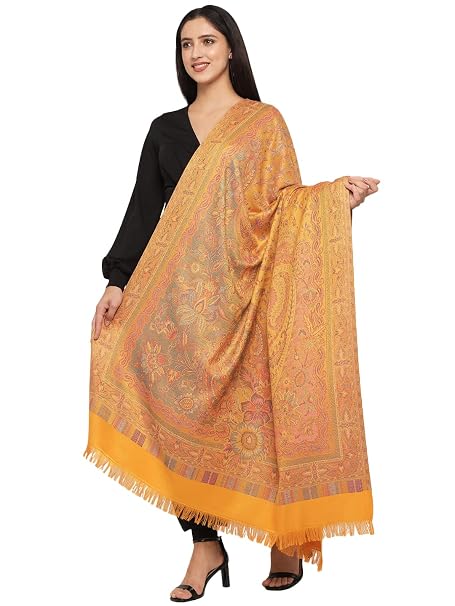
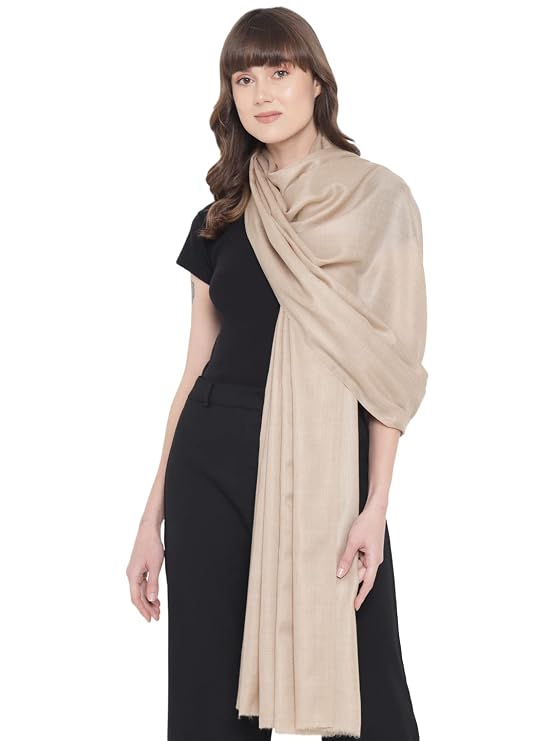
Below is a curated collection of pashmina shawls, stoles, and jacquard designs across different styles, weaves, and price points.


What Makes Pashmina Different From Regular Wool
Pashmina wool is collected from the soft undercoat that Changthangi goats grow to survive the extreme cold of the Changthang plateau in Ladakh and the surrounding Himalayan region. Once the goats naturally shed their winter coat, the fibre is combed out by hand – never sheared – and sorted before spinning. This process yields an extremely fine fibre, typically between 12 and 16 microns in diameter, which is significantly softer and lighter than standard sheep wool.
Because the fibre is so fine, weaving pashmina requires enormous skill and patience. A single shawl can take anywhere from one week to several months to complete, depending on the complexity of the pattern. This is why genuine pashmina is priced higher than synthetic or wool-blend shawls sold under the same name. Many products available today, including Jamawar and jacquard designs, use a faux-pashmina blend to make the look more accessible while keeping the traditional patterning intact.
How to Identify a Genuine Pashmina Shawl
- The ring test: A genuine pashmina shawl is fine enough to pass through a finger ring without resistance. Synthetic or heavily blended shawls will not.
- The burn test: A small thread from real pashmina burns slowly and smells like burning hair, leaving soft ash. Synthetic fibres melt and smell like burning plastic.
- Texture and weight: Real pashmina feels soft yet slightly textured, not glassy-smooth like polyester blends, and it is noticeably lightweight for its size.
- Price consistency: Extremely low prices for “100% pashmina” are usually a sign of a wool or viscose blend rather than pure cashmere.
- Certification: Look for GI (Geographical Indication) tags for Kashmir Pashmina, which certify authenticity and traditional production methods.
Pashmina Types Compared
| Type | Composition | Texture | Ideal For |
|---|---|---|---|
| Pure Pashmina | 100% cashmere goat wool | Ultra-soft, lightweight | Formal wear, gifting, collectors |
| Faux Pashmina | Wool-viscose or acrylic blend | Soft, slightly heavier | Everyday, budget-friendly wear |
| Jamawar Weave | Pashmina or faux-pashmina base | Dense, richly patterned | Festive and formal occasions |
| Jacquard Weave | Pashmina or blended yarn | Structured, textured pattern | Gifting, office and evening wear |
Caring for Your Pashmina Shawl
- Hand wash only, using a mild, pH-neutral shampoo rather than regular detergent.
- Never wring the fabric – gently press out water and lay flat to dry away from direct sunlight.
- Store folded in a breathable cotton bag, never in plastic, to prevent moisture buildup and moth damage.
- Add a few dried neem leaves or lavender sachets in storage to naturally repel moths.
- Avoid spraying perfume directly onto the fabric, as alcohol-based sprays can damage delicate fibres.
Frequently Asked Questions
Is pashmina the same as cashmere?
Pashmina is technically a finer, higher grade of cashmere, sourced specifically from Changthangi goats and traditionally hand-spun and hand-woven, while broader “cashmere” can include machine-processed wool from various goat breeds.
Can pashmina be worn in summer?
Yes. Despite its warmth in winter, pashmina’s breathability makes lighter-weight pieces comfortable as an evening layer even in warmer months.
What is the difference between Jamawar and Jacquard pashmina?
Jamawar refers to a specific richly patterned weaving style historically associated with royal courts, while jacquard is a broader weaving technique that can produce many types of structured patterns, including Jamawar-style designs.
Final Thoughts
A genuine pashmina shawl is an investment piece – one that, with proper care, can last for decades and often becomes a family heirloom. Whether you are shopping for a solid-colour everyday wrap or an intricately woven Jamawar piece for special occasions, understanding fibre quality, weave type, and authenticity checks will help you make a confident, informed purchase.