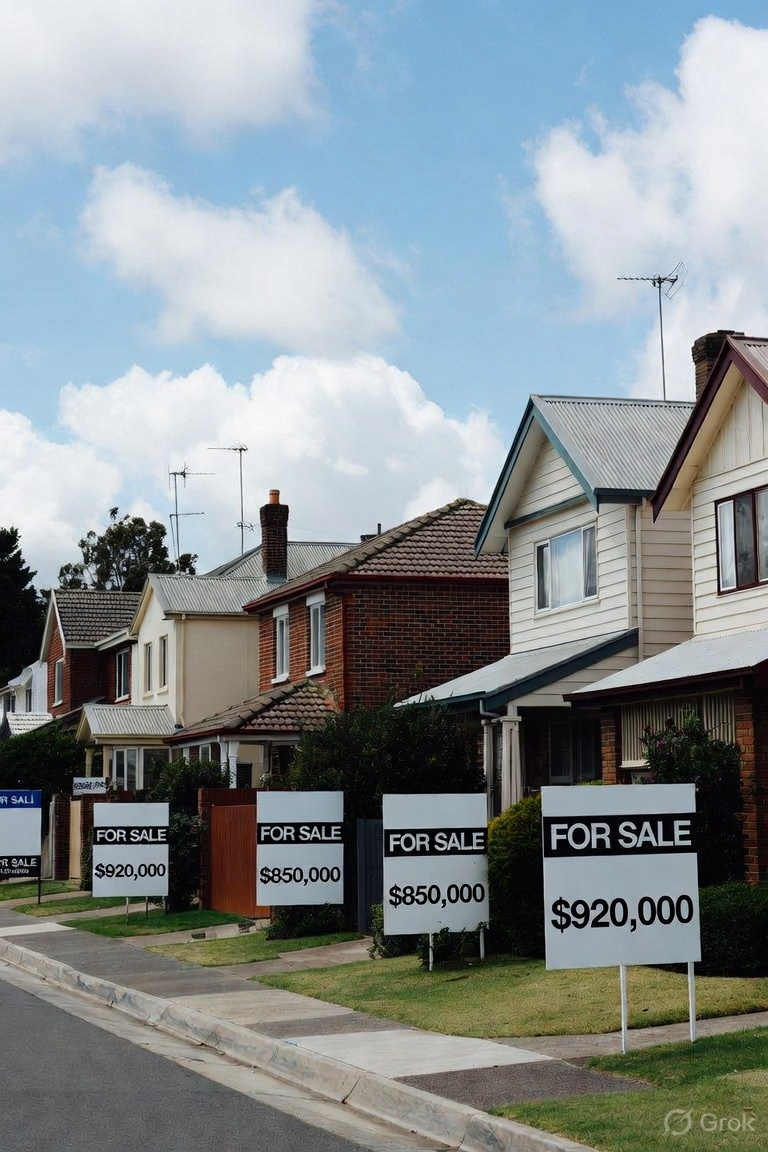
Australia's housing market entered 2026 red-hot and is ending the first half of the year noticeably cooler. The national median dwelling value sits at a record high, yet auction clearance rates are sliding, sellers are discounting, and the two biggest cities — Sydney and Melbourne — have tipped into buyers' territory. At the same time, Perth, Brisbane and Darwin are still posting double-digit annual gains, and rents keep climbing. In short, there is no single “Australian market” right now — there are eight of them, moving in different directions.
Median Dwelling Values by Capital City
Here is where each capital stands and how it has moved over the year to 31 May 2026. Notice how wide the spread is — the “national average” is almost meaningless on its own.
| City | Median value | Annual change |
|---|---|---|
| Sydney | $1,282,020 | +2.3% |
| Perth | Approx. $1.09M (house) | +25.8% |
| Darwin | $634,368 | +20.3% |
| Brisbane | Over $1M | +19.1% |
| Melbourne | Over $1M | +0.5% |
| Combined capitals | $1,030,973 | — |
| Combined regional | $771,365 | — |
Six capital cities — Sydney, Melbourne, Canberra, Brisbane, Adelaide and Perth — now have median house prices above $1 million. Perth was the most recent to join this “million-dollar club”.
Why Prices Rose So Fast
The 2024–2025 surge was driven by a familiar mix: chronically low housing supply, strong population growth from migration, and the anticipation of interest rate cuts. Perth, Brisbane and Darwin led the charge because they started from a lower base, offered better rental yields, and drew interstate investors chasing affordability and growth. Perth's median house price has more than doubled since 2019.
The Turning Point: A Cooling Market
Momentum has clearly shifted in 2026. Several signals point the same way:
- Auction clearance rates have fallen from a peak near 66% in early February to the low 40% range by June — a level that historically signals falling prices in the big auction markets.
- Vendor discounting across the combined capitals has risen to 3.6%, up from 3.0% in the March quarter, giving buyers more room to negotiate.
- Sales volumes in Sydney and Melbourne are running 17% and 14% below a year ago, while listings have risen above average — a classic shift toward a buyers' market.
- Even the affordable end of Sydney, Melbourne and Canberra — long a refuge for budget buyers — is now recording value falls.
Two Markets, Opposite Directions
Still rising: Perth, Brisbane, Darwin
These mid-sized capitals continued to post strong annual growth, supported by tighter supply, comparatively better value, and higher-than-average local wages. Even here, though, the monthly pace has begun to ease from its peak.
Stalling or falling: Sydney, Melbourne
The nation's two largest and most expensive markets barely grew over the year and slipped over the most recent month. Affordability limits, higher borrowing costs and rising supply have shifted negotiating power firmly to buyers.
The Rental Squeeze Continues
While capital growth cools, renters are getting no relief. National rents rose 5.9% over the year to June 2026 — the strongest annual pace since September 2024 — driven by a critically low rental vacancy rate of just 1.5%. For investors, softening prices combined with tight rentals and rising yields create a very different calculation than a year ago.
What the Forecasters Expect for 2026–2027
The major banks and research houses have turned cautious:
- ANZ Research downgraded its capital-city growth forecast to 2.8% for 2026 and 2.1% for 2027.
- Westpac expects dwelling prices to stall flat on average across the major capitals for calendar 2026, with Sydney and Melbourne recording outright declines.
- Domain expects a gradual recovery to begin around the middle of 2027, timed to the first expected rate cut.
- Units are tipped to hold up better than houses, and sub-median properties better than the premium end.
What It Means for Buyers and Investors
- Buyers in Sydney and Melbourne have the most negotiating power in years — more listings, higher discounts, less auction competition.
- Investors face a trade-off: softer capital growth but strong, rising rental yields and record-low vacancies.
- The location call matters more than ever — with the national average flat, returns will depend heavily on the specific city, suburb and price tier.
Frequently Asked Questions
What is the average house price in Australia in 2026?
As at 31 May 2026, the national median dwelling value was $941,864 (houses and units combined), up 8.8% over the year. Combined capital cities sat higher at about $1.03 million.
Which is the most expensive Australian city?
Sydney remains the most expensive capital, with a median dwelling value of about $1.28 million. Darwin is the most affordable at around $634,000.
Are Australian house prices going to fall in 2026?
The market is cooling. Sydney and Melbourne are already seeing modest declines, and forecasters like Westpac expect prices to be flat-to-lower across the major capitals in 2026, with a recovery not expected until around mid-2027.
Why is Perth's property market booming?
Perth benefited from a lower price base, strong local wages, tight supply and interstate investor demand, pushing annual growth above 25% and its median house price past $1 million for the first time.
Disclaimer: This article is for general information only and reflects publicly reported data and forecasts as of July 2026. Property values, rents and forecasts change and vary by location. This is not financial, investment or property advice. Always do your own research and consult a licensed professional before making any property or investment decision.